Turin after darkSafer Streets at Night

Walking Turin after dark

A simulation of the people who walk Turin's streets, and of what street lighting changes about where they go at night.

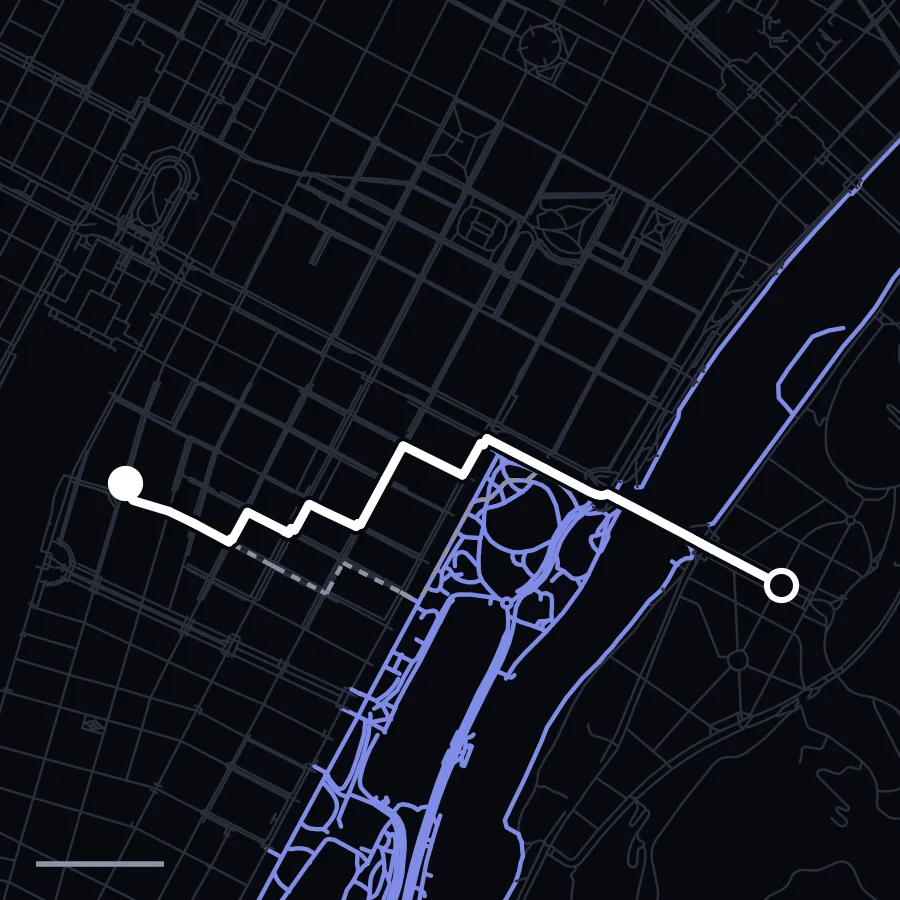
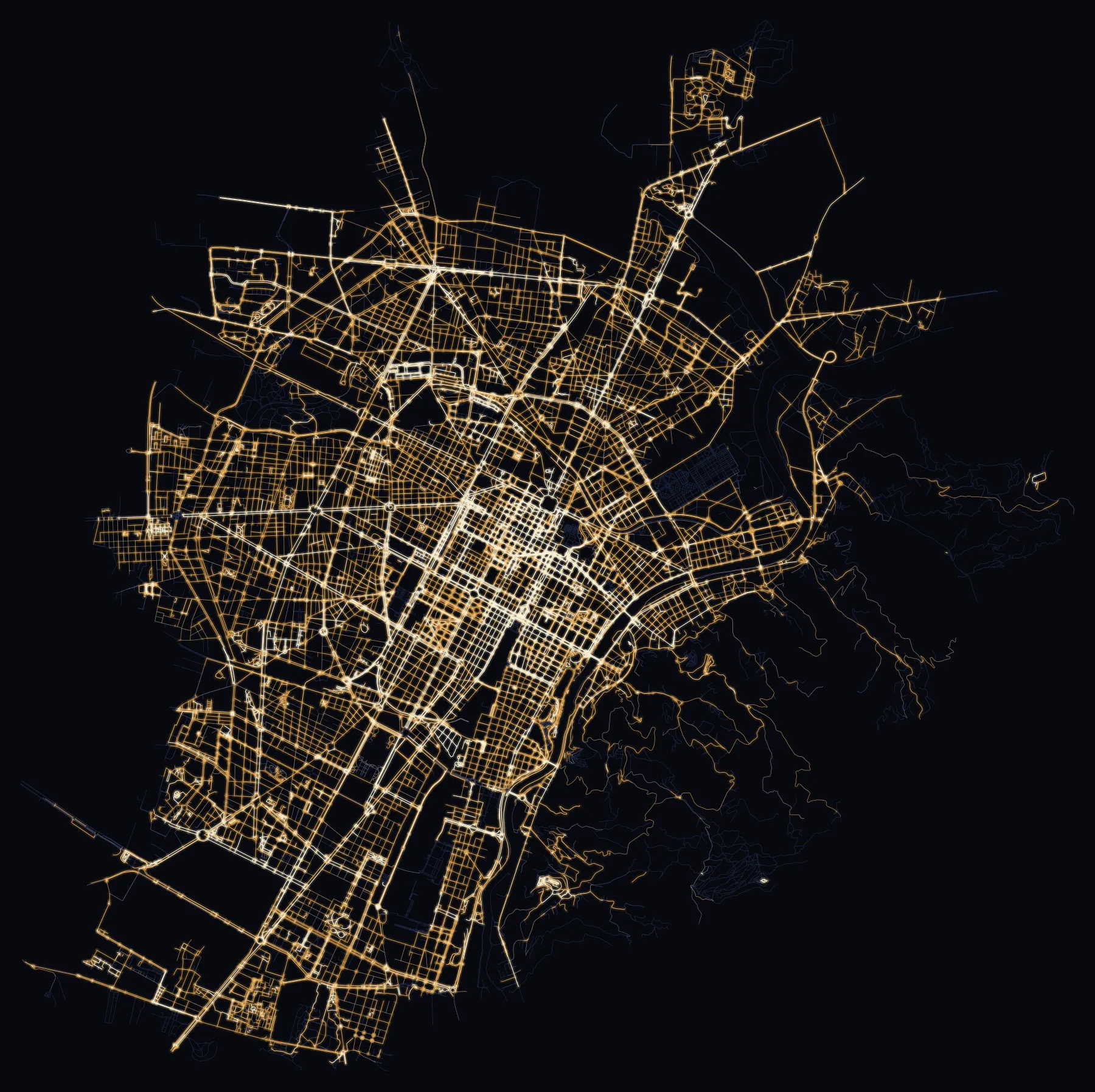
Turin's street network at night, each street drawn by how brightly it is lit
2,241 km of streets, drawn by modelled night-time illuminance.

PedSimCity is an agent-based model. Its population is drawn from the census, one section of the city at a time, and every simulated person goes through a day: work or school, errands, visits, the way home.

After sunset the model's pedestrians weigh how long a street is against how dark it is, how enclosed and how empty. Women give these more weight than men do. We want to know how much that changes the streets each group actually uses, and where better lighting would change it.

The study of Turin is a partnership between the University of Liverpool, the City of Turin and ToMove.

Open the map
The evening

Over the year, sunset in Turin moves by almost four and a half hours, from 16:50 in late December to 21:18 in mid-June.

A trip to the shops at 18:00 is made in daylight from March to September. In winter the same trip is made in the dark, at the same time as the evening commute.

darkdaylight18:00

Street lighting

71% of Turin's street length gets 10 lux or more, roughly the level above which extra light does little for how safe people feel. 15% gets less than 5.

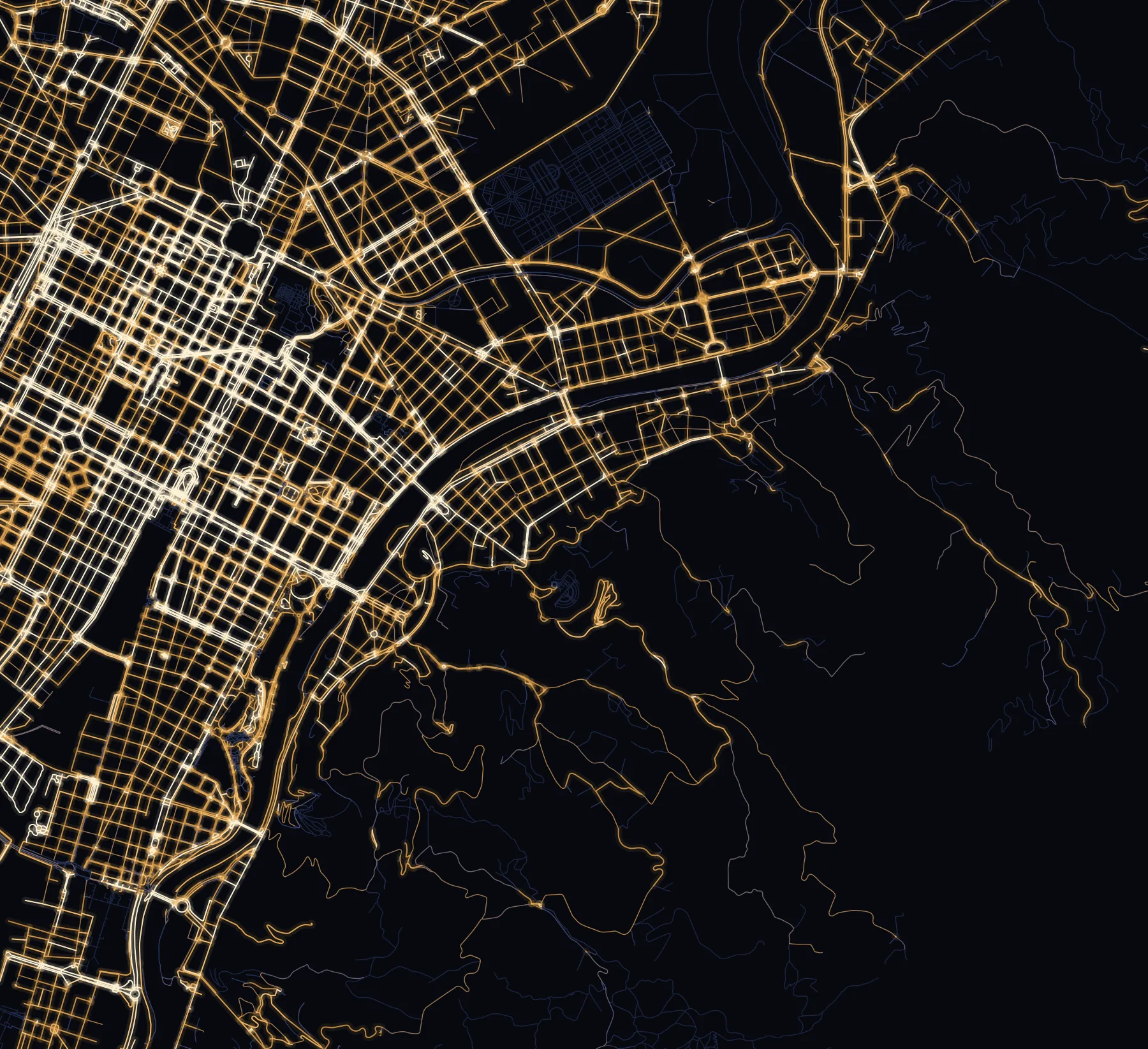
We estimated the light on every street from the position, height and type of each of the city's street lamps. The darkest streets are on the hill east of the Po, in the parks and along the rivers.

9%under 1 lux
5%1–5 lux
14%5–10 lux
41%10–20 lux
30%over 20 lux

Mean illuminance along each street, modelled from lamp positions and light fall-off. On the 10 lux threshold: Fotios, Unwin & Farrall (2015); Portnov, Fotios et al. (2024).

Close-up of central Turin, the river Po and the hill, by modelled illuminance
The centre, the Po and the hill. Brighter, warmer lines get more light.

Who is out

The phone network counts who is in each part of the city, two hours at a time. Among people passing through, the share of women changes from street to street and from hour to hour.

Vodafone records the phones present in each 216 m square of Turin, with the sex of the subscriber. Here we keep only people who stayed less than thirty minutes, which leaves out most of those at home or at work. Red squares have a larger share of women than the city as a whole, blue a smaller one. We check the model's pedestrians against these counts. The counts cannot tell someone walking from someone in a car or on a tram.

Share of women among people staying under 30 minutes, in percentage points from the city average, from 06:00 to midnight and then overnight. One month per season: October–November 2025, January–February, April and July 2026. Squares with fewer than 50 people are left blank. Vodafone Analytics, Smart Locator.

The model

846,567 residents in 6,775 census sections, 41,893 street segments, and a clock that moves five minutes at a time, day and night.

Home and occupation
Who lives where, and who works, studies or is retired, as the 2021 census reports it for each section.
A daily programme
Work, school, errands and leisure, each with a departure time. Weekends differ from weekdays.
Destinations
Chosen by how attractive a place is and how far away, with a preference for places already visited.
Walk or not
Most short trips are walked and most long ones are not. After dark, a walk through dark, enclosed or empty streets counts as a longer one, so fewer are walked, women's more so. Only walked trips appear on the street.
Route
Planned on the streets the person knows, and changed on the way if needed.

Routes at night

At night a street costs more than its length. Four things add to it, and women in the model give each of them twice the weight men do.

Darkness
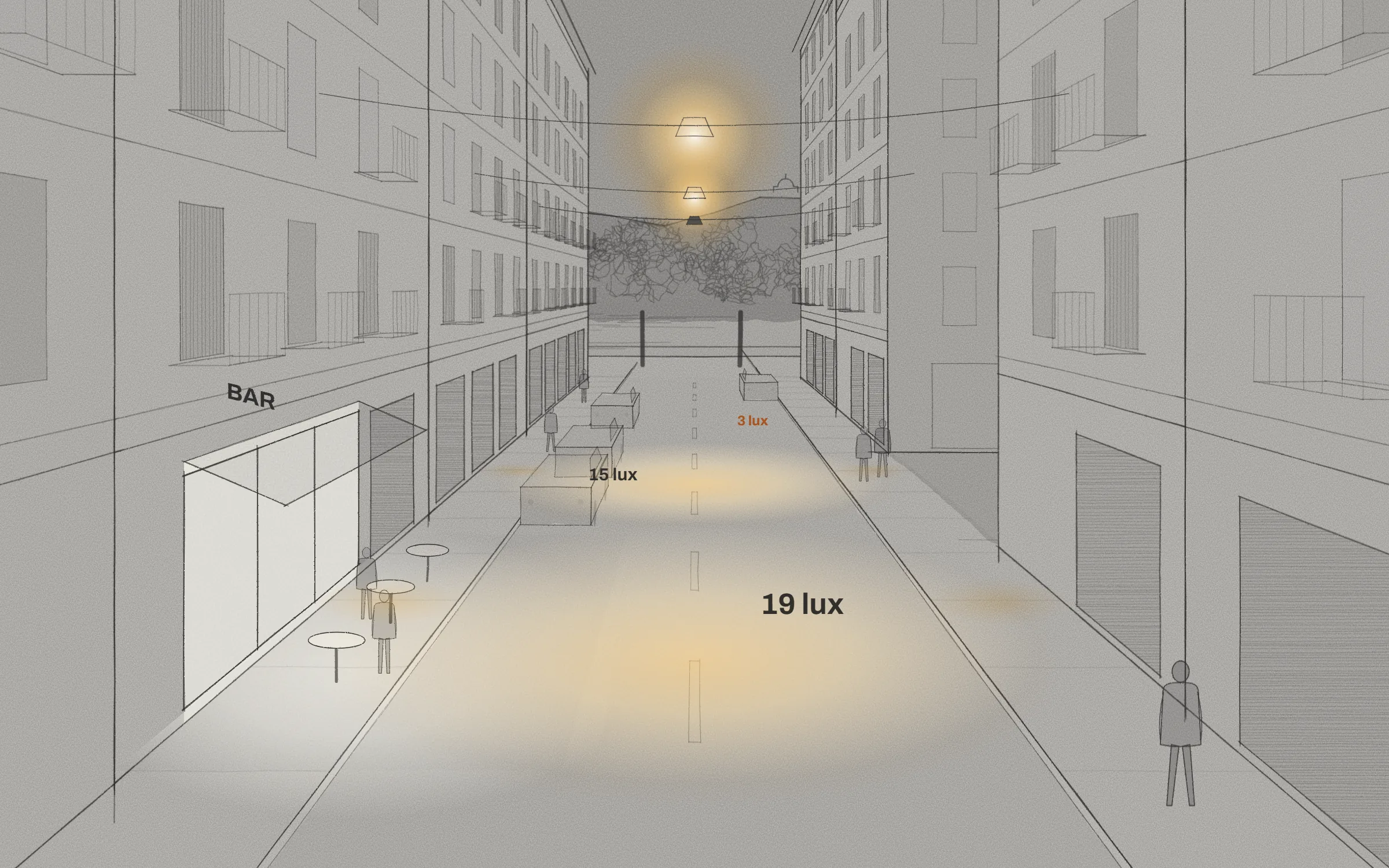
Each person needs a different amount of light, somewhere between 9 and 26 lux. Below it, the darker the street, the more it costs; above it, nothing extra.
Parks and rivers
Paths through a park or along the Po and the Dora.
Enclosure
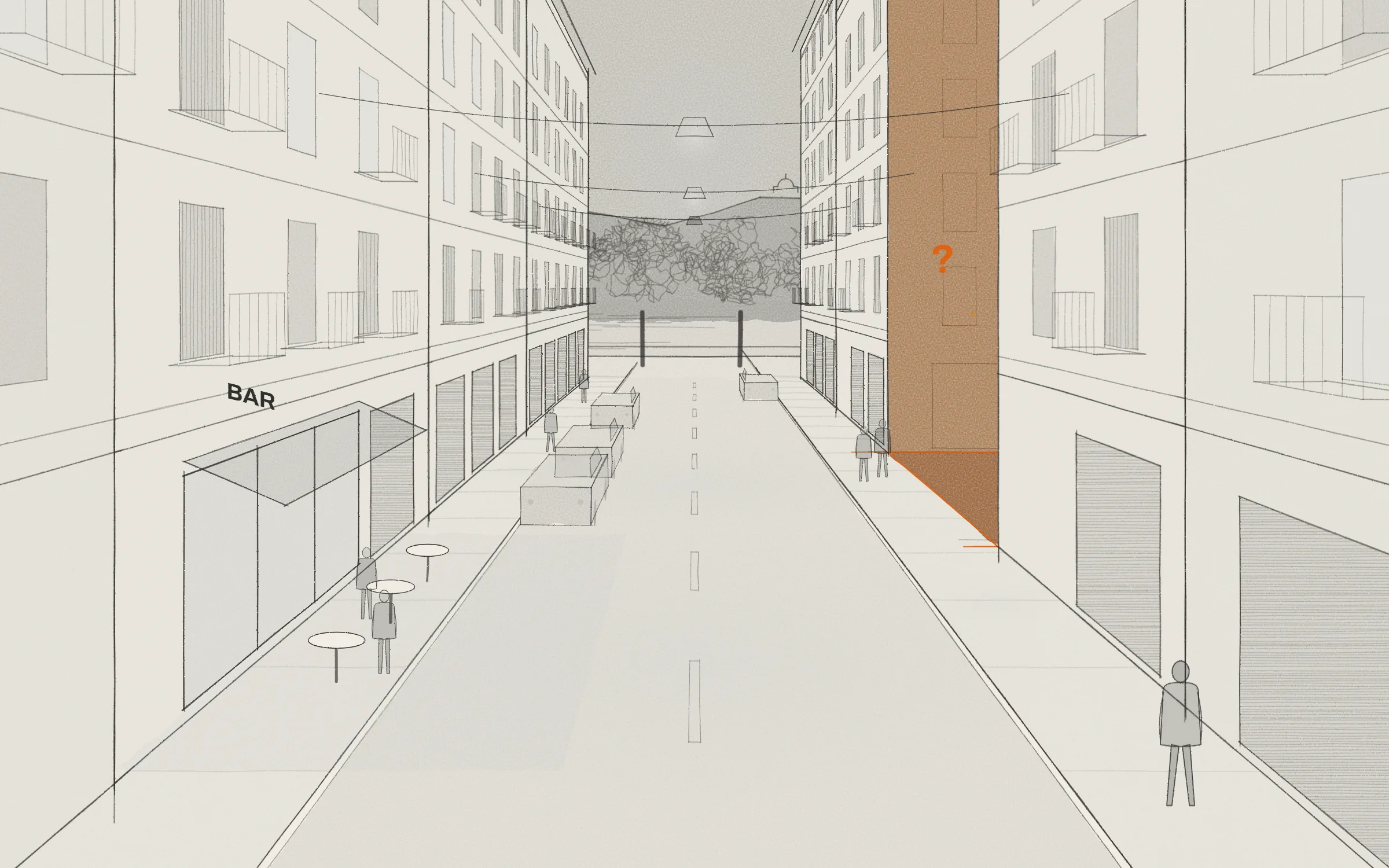
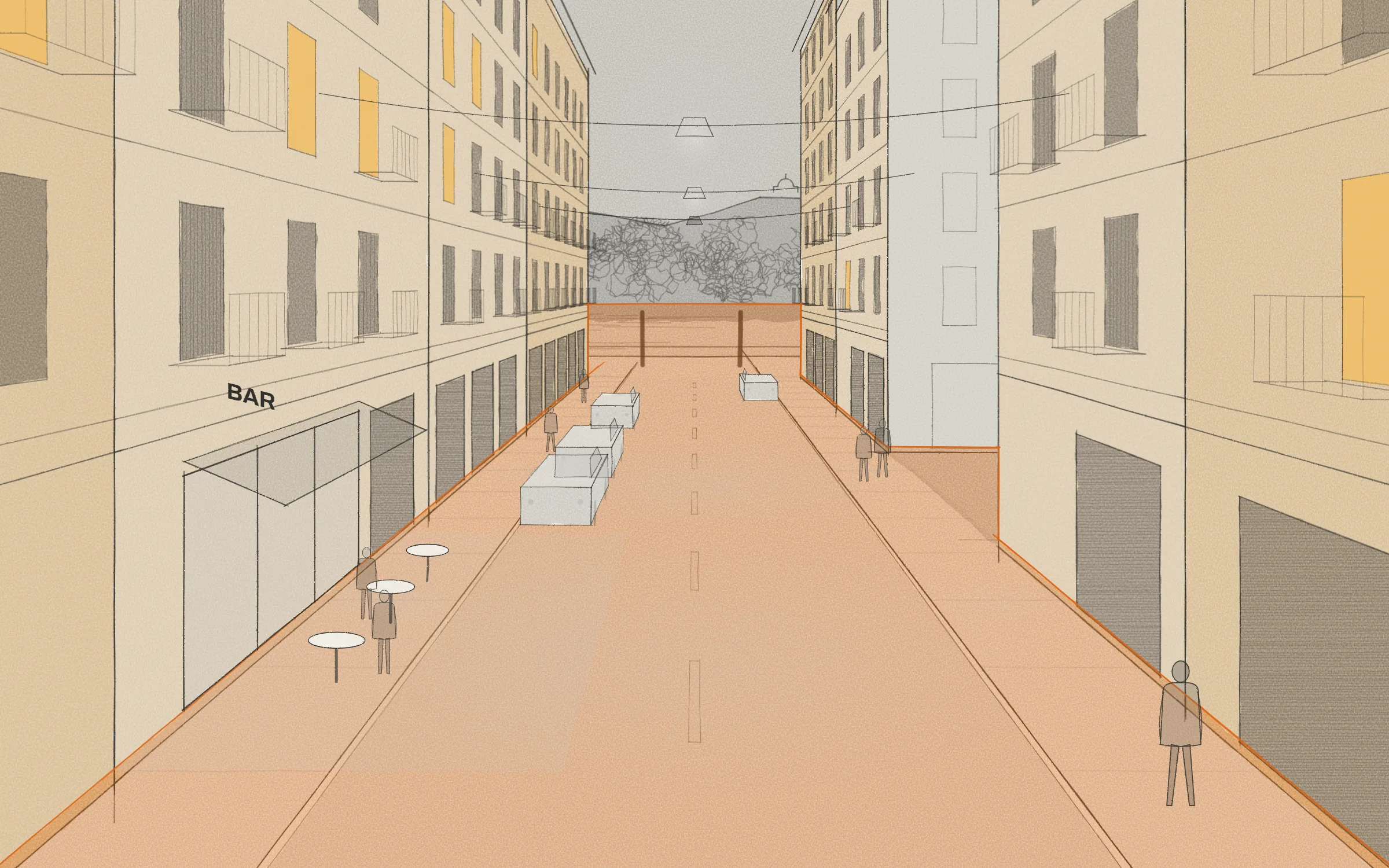
How little can be seen from the street. Where the area in view between the buildings falls below 5,000 m², the street counts as enclosed, and the smaller the view, the more it costs.
An empty street
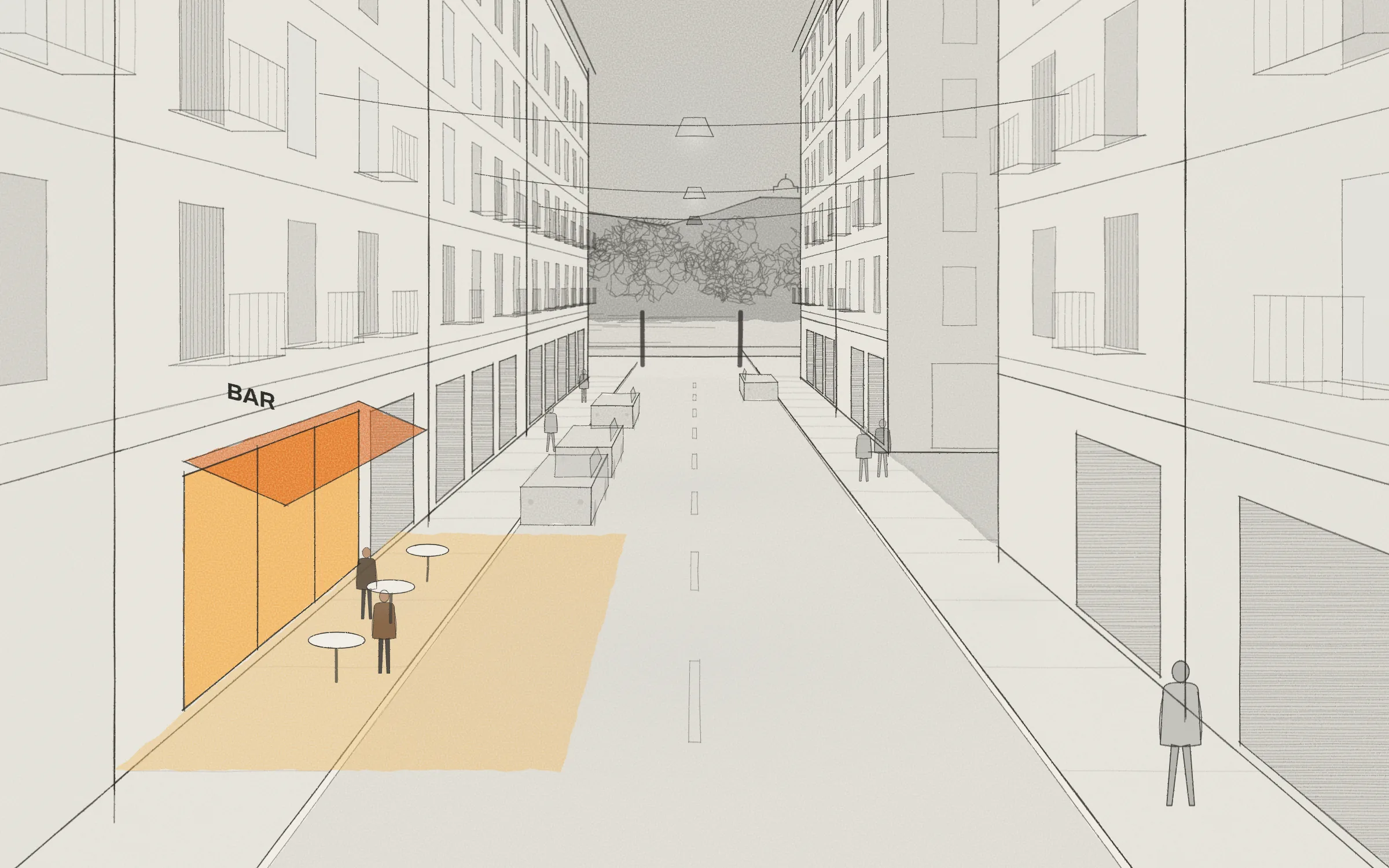
Shops, cafés, restaurants and bars open along it at that hour. A street with nothing open costs more than one with several.

People know how the streets they use every day are lit. For streets they don't know, they assume what is typical for that kind of street. If a street turns out darker than expected, they re-plan from where they are. A street with other people on it counts as neither dark nor empty. The same cost decides whether a trip after dark is walked at all: the dearer the route, the likelier it is made some other way.

The two-to-one ratio follows surveys of fear of walking alone after dark (ONS 2022; Gallup 2023). On the light people need: Fotios, Unwin & Farrall (2015); Portnov, Fotios et al. (2024). On fewer people walking after dark: Uttley & Fotios (2017). On enclosure: Fisher & Nasar (1992). On open venues as eyes on the street: Jacobs (1961). On busy streets: Ferraro (1995). The weights are provisional and have not yet been calibrated.

On the street

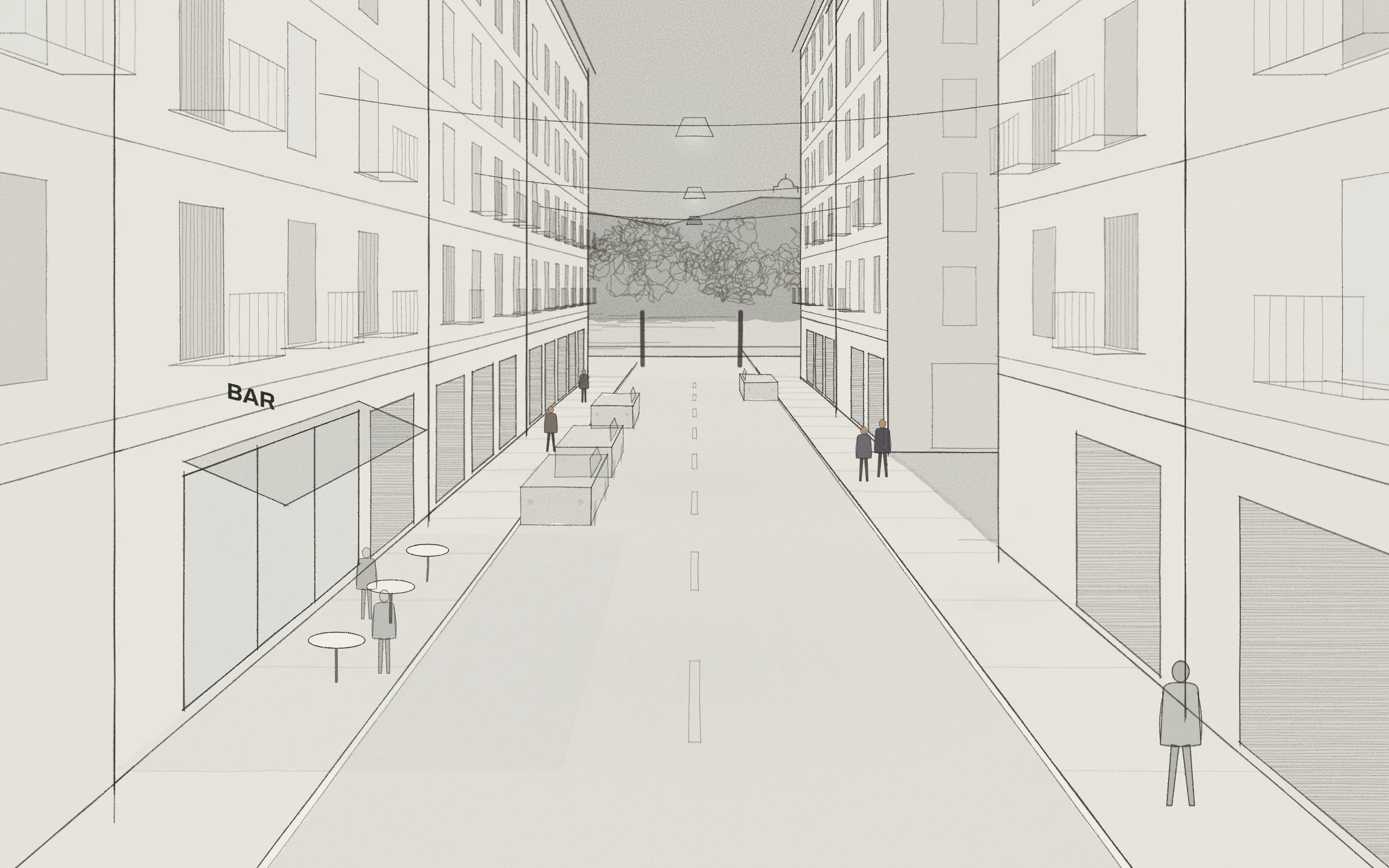
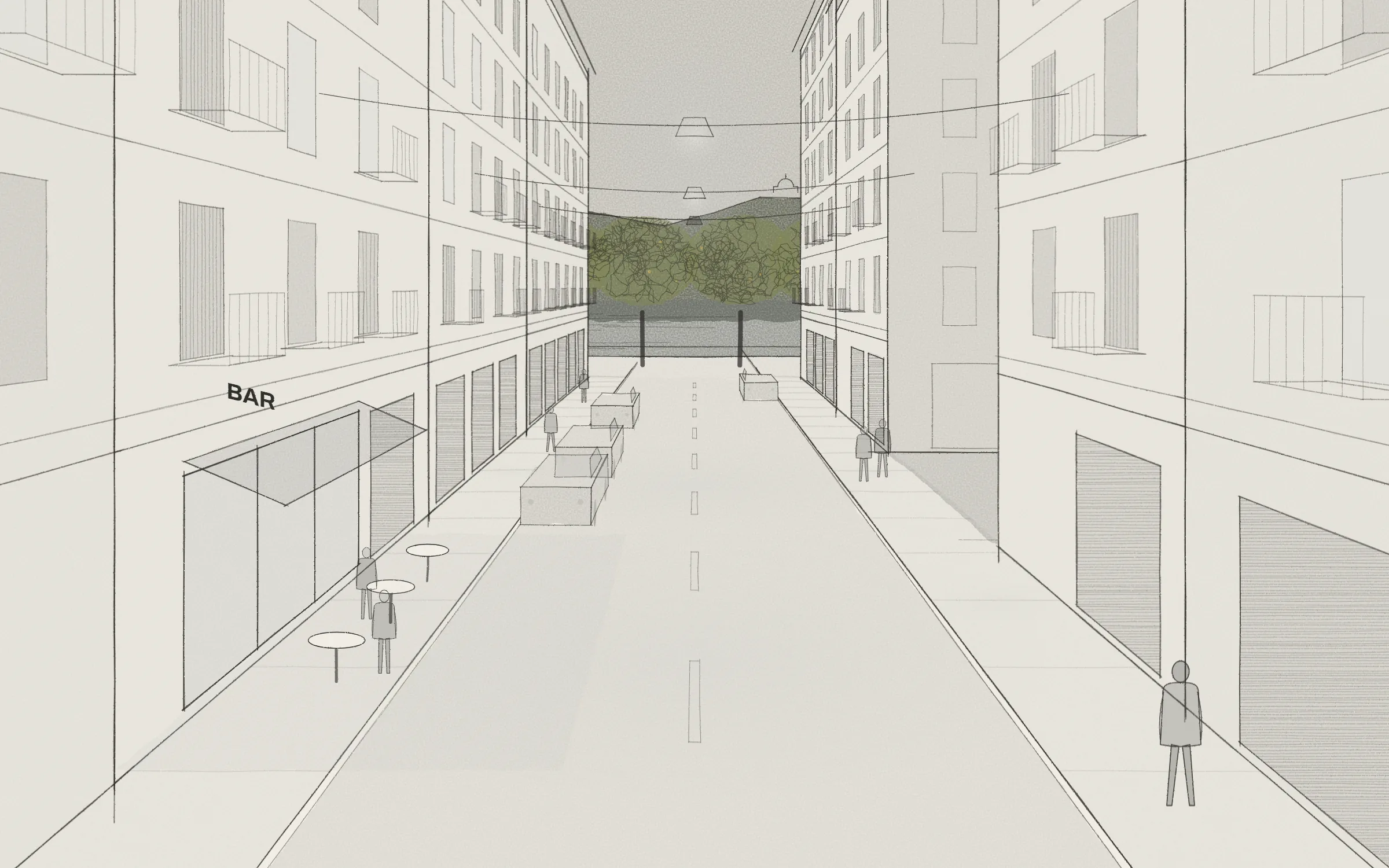
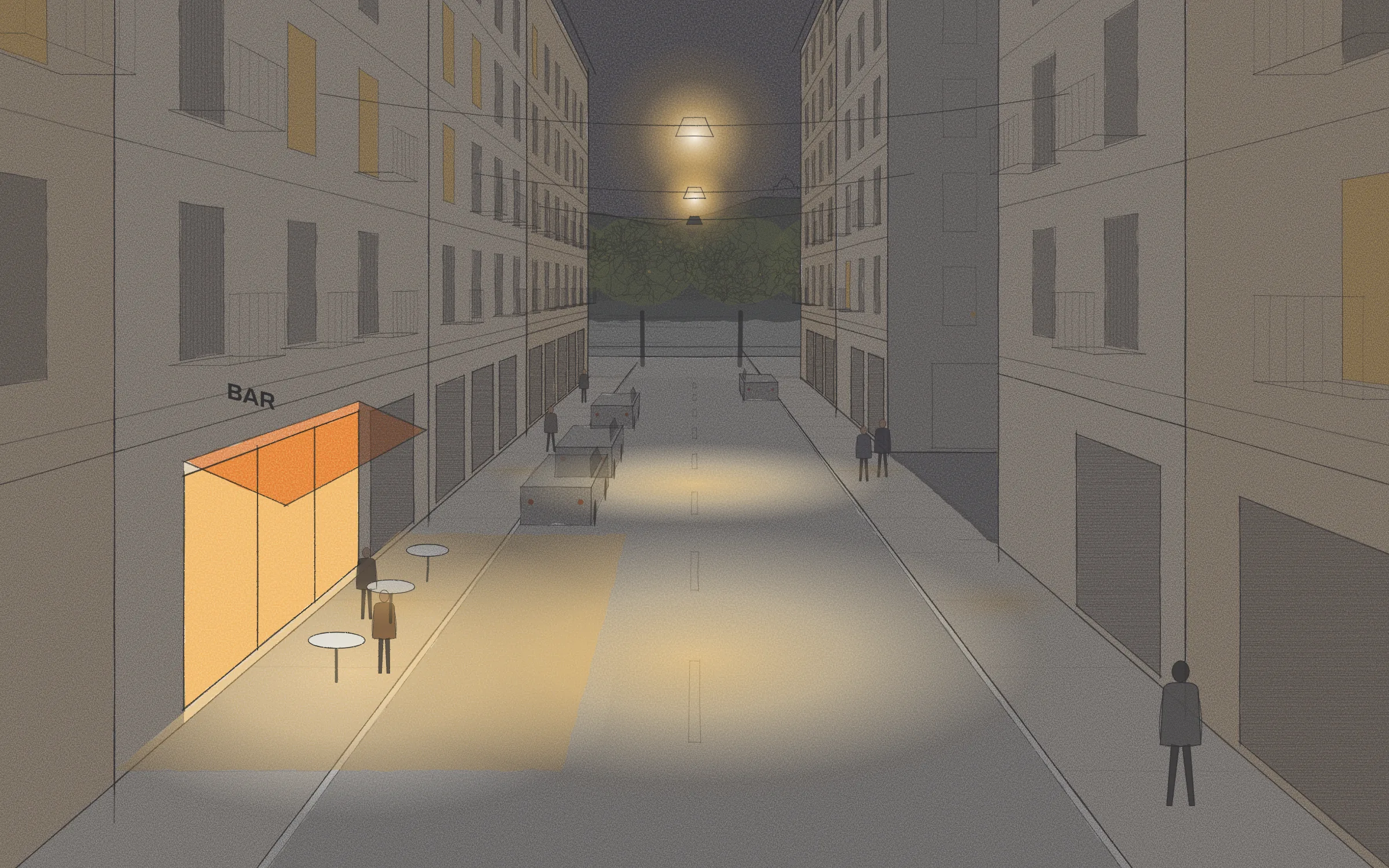
A street like many in San Salvario at 22:00, and a woman walking down it. Six things in it change the route the model plans for her.

Street by street

Every street in Turin, by one of the four at a time. Point at a street, or tap it, to see what the model knows about it and what it costs to walk at night.

Loading the street network…

Drag to move, double-click or Ctrl and scroll to zoom. Costs are for someone who knows how every street is lit and sees no one about, as a multiple of the street's length, at the provisional weights. Opening hours are the model's, by type of venue, not each place's own. Views are measured between building footprints, so trees and walls do not close them.

One trip

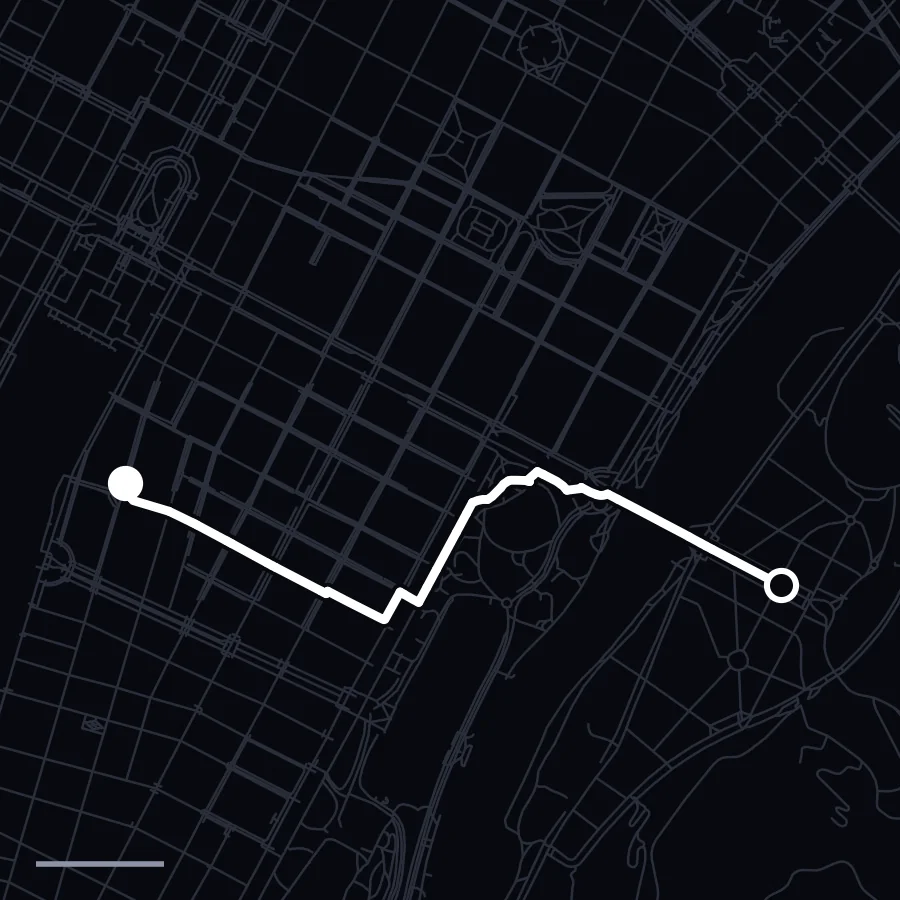
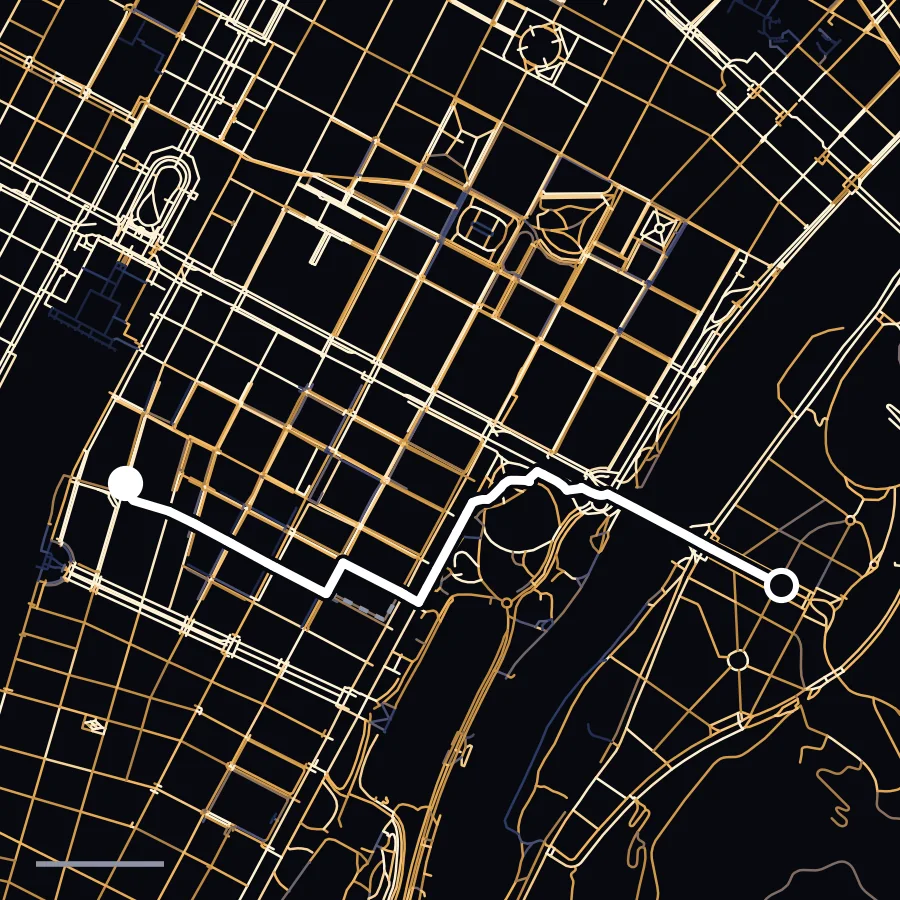
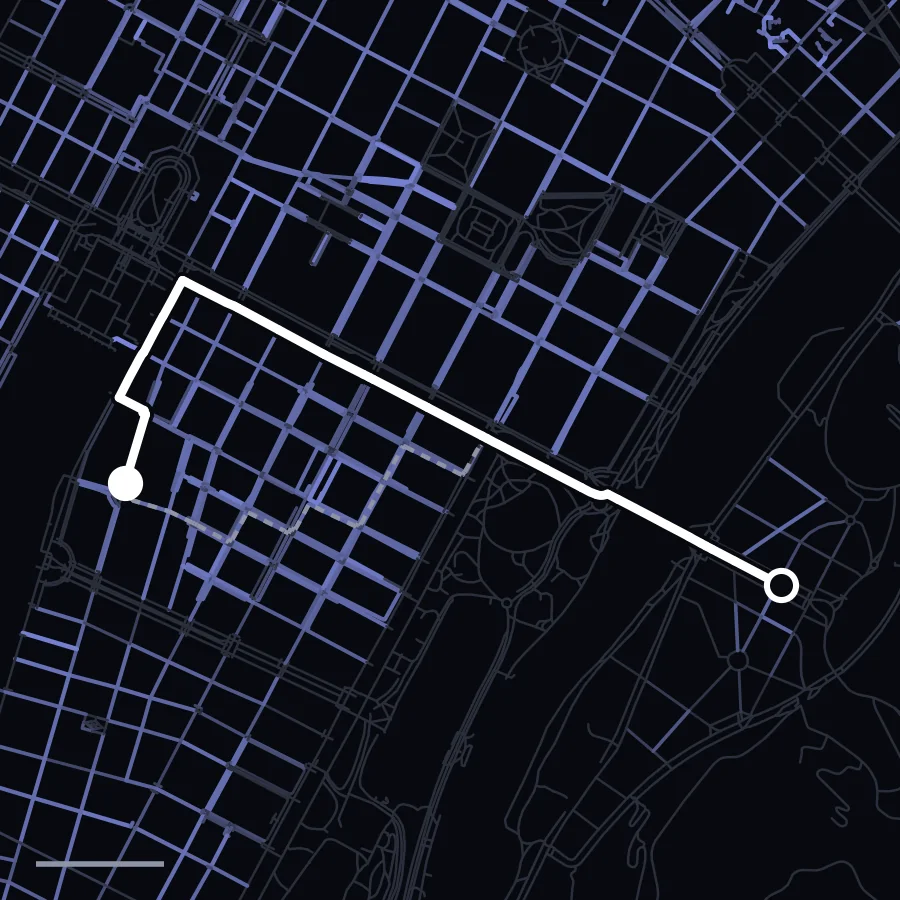
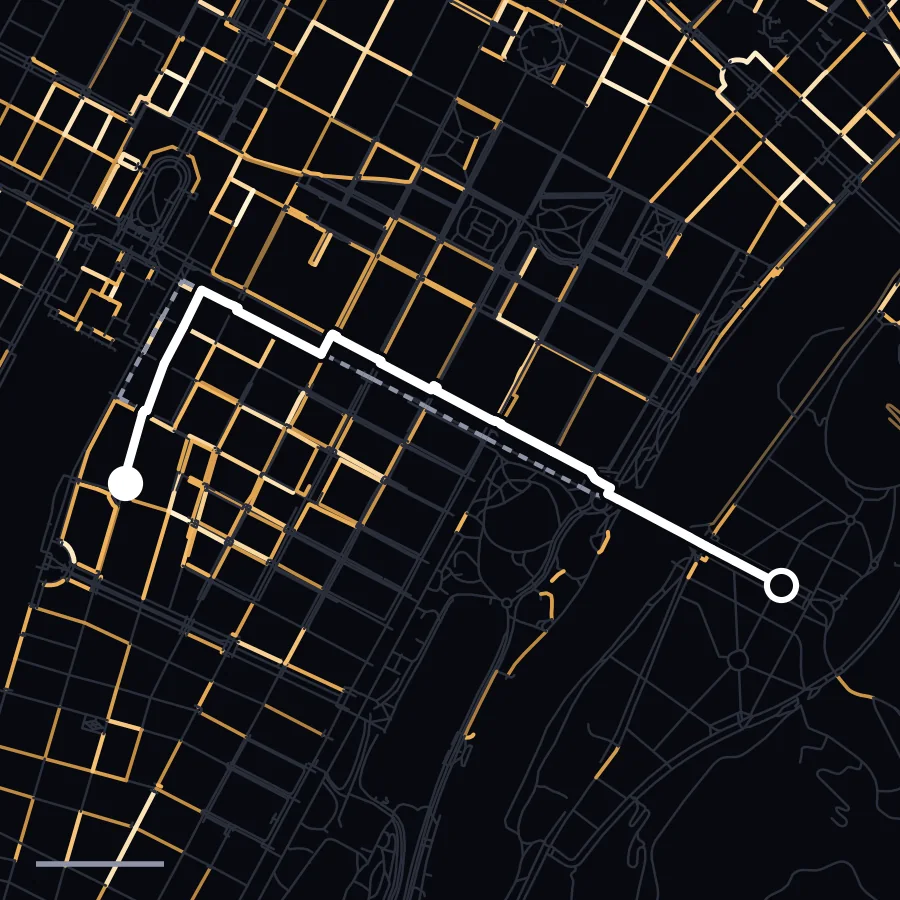
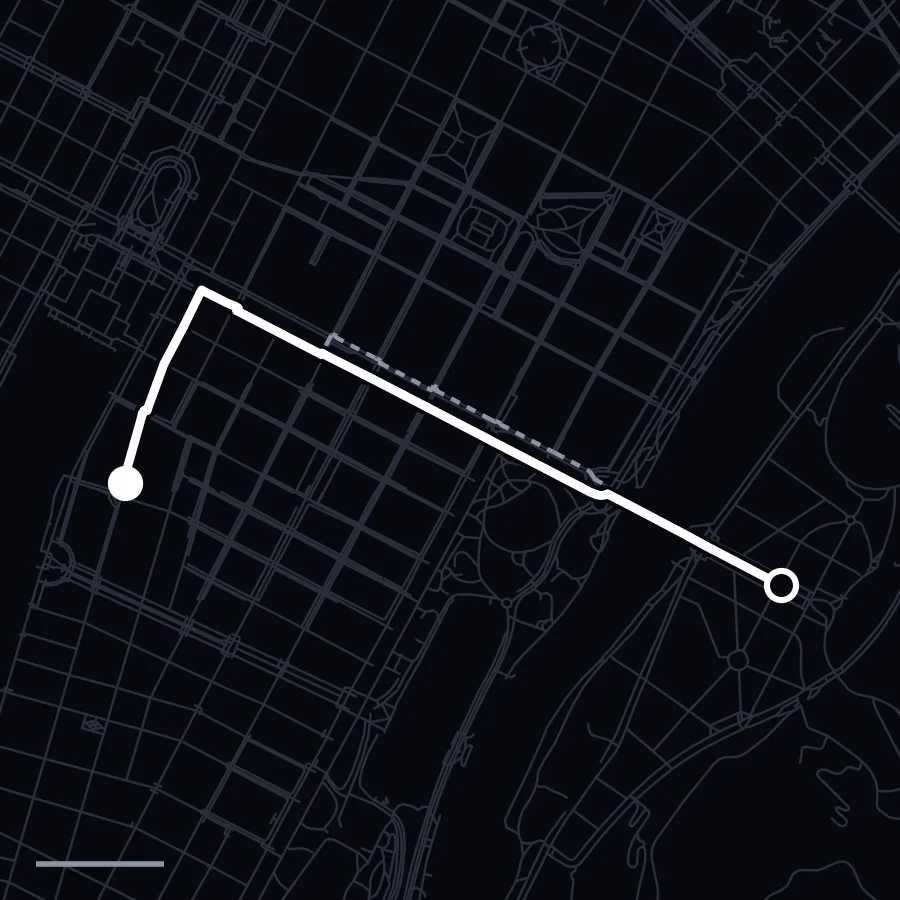
A winter evening at 22:00, from Via Saluzzo in San Salvario to Corso Fiume across the Po. A woman in the model plans it again each time one of the four is added.

Each panel draws the streets by the term just added: by their light, then the park and the river in blue, then how enclosed they are, bluer the more enclosed, then the places open at that hour, warmer the more there are. Her route is in white, from the filled dot; the one before it is dashed.

The shortest route
The shortest route1,601 m.
Add darkness
Add darkness1,603 m. Under 10 lux: 197 → 11 m.
Add parks and rivers
Add parks and rivers1,634 m. Beside a park or the river: 504 → 0 m.
Add enclosure
Add enclosure1,776 m. On enclosed streets: 887 → 305 m.
Add an empty street
Add an empty street1,773 m. Where almost nothing is open: 1,625 → 890 m.
A man, the same four at half the weight
A man, the same four at half the weight1,692 m. Dashed, her route.

Routes from the model's night cost, for someone who knows how every street is lit and sees no one about. The bar in each panel is 250 m.

The map

Four simulated seasons of walking in Turin, street by street and hour by hour, and which streets women and men use after dark.

After dark the model's women walk less than its men. By day 52% of the metres walked are walked by women; after dark, 46%. The drop is much the same in every district, between five and six and a half points. The routes women do walk after dark are about 5% shorter than men's, in every season, because the long dark walks are the ones they stop making on foot; by day there is no difference. In winter, 13.2% of what women walk in the dark is on streets under 10 lux, against 14.4% for men, and 14.0% is on enclosed streets, against 15.7%.

Four seasons, each three days of 20% of Turin's residents, run five times. The size of these differences comes from weights still to be calibrated.

Open the map

What it is for

Street lighting is one of the few things a city can change directly about how its streets feel at night. We want to show where it would change how people walk, and to test changes before any lamps go in.

PedSimCity is open source and can be set up for other cities. See the team and funding, or the source code on GitHub.

In partnership with

Città di TorinoToMove